Emergency HVAC repair
No heat or no cooling right now? Call first.
If your heat or cooling is out, call now — emergency requests route first, and we'll connect you with an independent local HVAC tech. Prefer to type it out? Request service online instead.
AirFlow connects you with independent local HVAC pros. It does not perform HVAC work itself.
Triage
Is your heat or cooling out right now?
Yes — call now
- No heat when outdoor temperatures are freezing
- An AC blowing warm air during a heat wave
- A burning smell, sparking, or smoke from the unit — cut power and call now
- A carbon monoxide alarm sounding near a gas furnace — leave the home first, then call 911
No — steady situation
- Uneven temperatures between rooms, or a system that short-cycles
- Rising energy bills with no change in use
- A furnace or AC that's aging but still running
- You want a second opinion or a planned replacement
An HVAC emergency means your heat or cooling is out right now — a furnace that quit on a freezing night, an AC blowing warm air in a heat wave, or a system making burning smells or loud new noises. In that situation, turn the thermostat off, check the breaker, then call. Every hour without heat in a freeze — or without cooling in a heat wave — pushes the house further out of a safe, comfortable range.
AirFlow HVAC is a free referral service — we don't perform HVAC work ourselves. When you call, we connect you with an independent local HVAC tech; emergency requests route first for no-heat and no-cooling emergencies.
On arrival
What the HVAC tech does first
The first visit follows a fixed order — check safety, find the source, explain the fix.
Checks safety first
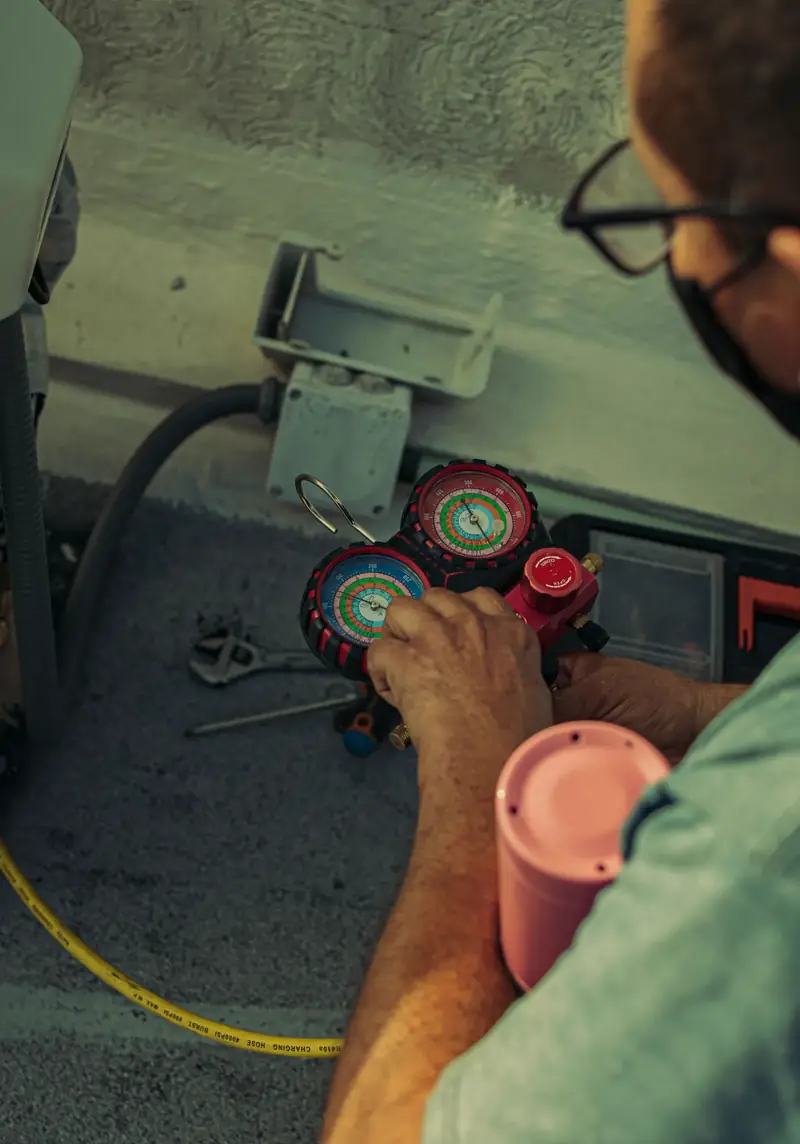
The HVAC tech checks for anything unsafe — burning smells, electrical issues, or gas odors — before working on the system.
Finds the source
Tracing the failure back to the failed part — thermostat, capacitor, blower motor, or compressor — and checking whether repair beats replacement.
Explains the fix
Repair vs. replace, laid out in plain language with what drives the cost — before any work starts.
Gets it done
The repair or replacement is done to local code, tested, and cleaned up. Any warranty comes from the HVAC tech — get it in writing.
Covered now
Services that handle active emergencies
These are the calls HVAC techs take first when heat or cooling is out.
- Emergency HVAC RepairEmergency HVAC repair is urgent service when your heating fails in freezing weather or your cooling quits in a heat wave — when comfort becomes a safety issue. Turn the system off if you smell gas or burning, then call. AirFlow HVAC connects you with an independent local HVAC pro — you work directly with the pro you choose.Learn more →
- AC RepairAC repair covers the faults that kill cooling: refrigerant leaks, failed capacitors and contactors, frozen coils, or bad thermostats. Warm air, short cycling, ice on the lines, or water pooling by the air handler all point to a pro visit. AirFlow HVAC connects you with an independent local HVAC pro — you work directly with the pro you choose.Learn more →
- Furnace RepairFurnace repair covers ignition failures, dead blower motors, faulty flame sensors, cracked heat exchangers, and short cycling. No heat, cold air from the vents, or the furnace shutting off after starting all call for a pro — especially with gas involved. AirFlow HVAC connects you with an independent local HVAC pro — you work directly with the pro you choose.Learn more →
Where
Emergency coverage across the US
Pros in our network take emergency calls in all 50 states, including:
Request emergency help
Describe what's happening — emergency requests route first for no-heat and no-cooling emergencies.
AirFlow connects you with independent local HVAC pros. It does not perform HVAC work itself.
Emergency FAQs
No heat or no cooling won't wait. Make the call.
Tell us what's happening and we'll connect you with an independent local HVAC tech — emergency requests route first.